Showing posts with label miscellaneous musings. Show all posts

Sunday, September 2, 2012

TALKIN' BOATS WITH ALTON HERNDON, BERTRAM YACHTS' PRESIDENT


POSTED IN SOUNDINGSONLINE.COM, AUGUST 31, 2012.  WRITTEN BY CHRIS LANDRY.

Alton Herndon is the president of Bertram Yacht, the legendary sportfishing-boat builder. He took the helm in early 2010 and orchestrated the company’s historic move from Miami to Merritt Island, Fla.
Herndon, 66, spends time offshore fishing Bertram yachts in tournaments. He built his first boat — a 16-foot fish/ski runabout with an 80-hp Mercury — at the age of 23. He got his first marine industry job in 1969 at Hatteras Yachts.
Herndon grew up in High Point, N.C., studied business at High Point College and later graduated from the University of North Carolina at Chapel Hill’s executive program.
He was president of Hatteras Yachts from 1985-1996 and held executive management roles at Palmer Johnson, Tiara Yachts and KCS International. He was co-founder and managing partner of Southport Boat Works, was chairman of the National Association of Boat Manufacturers and is a past member of the executive committee and board of the National Marine Manufacturers Association.
Herndon plans to move to the Merritt Island area with his wife, Dru, as the company relocates this fall. He has three children ages 28 to 40 and three grandchildren. In this interview, Herndon talks about his most memorable fish, names his favorite Bertram model and explains how the company’s relocation will result in bigger and better boats.
Q: After more than 50 years in Miami, why is Bertram moving to Merritt Island and what effect it will have on your boats?
A: We’re moving for two reasons. One, we’ve outgrown the facility with the size of the boats we’re building. They are too large in beam and height to efficiently build in our existing buildings. The Bertram 80 is the best example. We can only build that model partially under cover, and then we have to move it outside and put a tent over it during the remainder of the construction. To launch the boat, we have to get a house mover to take it to our launch site and place it in the middle of the road. Then we launch it by getting a 500-ton crane that has the reach to pick it up and swing it over the marina buildings and into the waterway into the canal. That exercise costs us tens of thousands of dollars. Anything over 60 feet we have to launch at high tide because our Travelift slip is not as wide as the beam of these boats. Even some of these large enclosed boats must be completed outside. We could spend a lot of money to correct our situation, but investing to do that is not a wise choice.
The second reason for moving is we are across the street from Miami airport property and services. The entire community around us is being developed for high-end commercial use to service the airport and be serviced by the airport. It would be foolish to make that tremendous investment to raise roofs, to build new slips and put in the equipment for these bigger boats at a time when, simply put, we would be in the wrong spot for large boatbuilding. To be heavy industrial, which we are, in a high-end commercial district is not a good idea.

Q: What makes the new location ideal for Bertram?
A: The new location had to have certain requirements. We were looking for properties that were on navigable water and that preferably had large, tall buildings. We wanted property that had at least 30 to 40 acres. And it goes without saying we were looking for a community in which we could attract good employees and teach them how to build our product. After all the mileage we put on our vehicles and ourselves searching the Eastern Seaboard from Miami to Virginia for the new location, we found a home meeting all of the requirements: Merritt Island. We are extremely excited about getting there.

Q: The move will also mark the beginning of a new building process for Bertram.
A: We are going to start using resin infusion to build our fiberglass parts. With resin-infused parts, you have a lighter-weight laminate, due primarily to less resin, and a higher percentage of fiberglass in the laminate. You have a lighter, stronger fiberglass part. The icing on the cake: It’s environmentally friendly, not only to the employees in our plant but to the community. It is as close to closed-molding lamination as you can get.

Q: What makes a Bertram a Bertram?
A: Bertrams historically have been known as hardcore, kick-ass saltwater sportfishing machines. We’re going to build on that. We design and build our boats for our owner’s intended use. We don’t design them to leave the dock when weather conditions say don’t leave the dock. But the boat has to be built so that if you get caught in bad weather, the boat is going to get you home. And our owners fish enough that they do get caught in it. You’re going to see new Bertrams that are lighter and faster; they’re going to be designed to have a more streamlined appearance. But when you see one you’re going to say, “That must be the new Bertram,” not “What is that boat?”

Q: Are there new boats on the horizon that consumers can look forward to?
A: What we will be focusing on short-term — meaning two to three years — will be developing new and refining existing models within our 50- to 80-foot range. Every Bertram we build is better than the last one. We learn with each boat. What we are looking for in the future is certainly more efficient boatbuilding, but the boats themselves will change according to our customers’ input, who are looking for improved performance, which could be higher top-end speed, higher cruise speed, improved fuel efficiency. They want the boat, in appearance, to be longer, lower, sleeker. Engine suppliers will continue to make high-horsepower packages, but those packages are going to be smaller and more fuel-efficient and lighter in weight.
Herndon favors the 31 for its classic look and profile and its iconic status as the boat 'that started the legend.'


Q: Which Bertram is your favorite?
A: For my personal ownership, I would love to have one of the Bertram 31s that started this company. Also, our 80-footer is one of the best Bertrams we have ever built.

Q: What in particular do like about the Bertram 31?
A: The 31 is a classic in look and profile and an excellent choice for my family to use and enjoy primarily as a day boat. Keep in mind this is the Bertram that started the legend. The 31 has a large cockpit that’s ideal for a couple of removable sailfish chairs or additional chairs for cruising inland waters. A combined shower/head, dinette and V-berth with a small galley are well arranged in the cabin. Top it off with a flying bridge comfortable for two, a bow deck suitable for sunning and engine boxes large enough to house a pair of today’s diesels. Many others felt the same as me about the boat. It was so popular it was built from 1961 to 1982 and then built again as a silver anniversary edition in 1985 and 1986, with a total of just under 2,000 built. The 31 was built in six models and shipped worldwide.

Q: What are some of your favorite boats other than Bertrams?
A: The boats I respect certainly would include the ones we compete with. That would be Hatteras and Viking and the custom boatbuilders. If you drop down to the center consoles, I would go for the Southport, which I started with Frank Longino, and the top-quality boats that are designed for their use — brands such as Grady-White, Contender, Regulator, Intrepid, Yellowfin. For motoryachts, I believe we build some of the finest in the world from the Ferretti Group, like Ferretti, Riva or Pershing.

Q: Can you name a few of those custom builders?
A: John Bayliss (www.baylissboatworks.com) does a really good job. Mark Willis (www.willismarineinc.com), Paul Mann (www.paulmanncustomboats.com), Paul Spencer (www.spenceryachtsinc.com) — all of those guys.

Q: What about smaller express boats?
A: The S2 boats — Tiara or Pursuit. And you have to remember those specialty boats, like the ski boats — MasterCraft and Correct Craft, who design boats that do things we wouldn’t even think of in the past.

Q: How did you get into the business of building boats?
A: I was working as an industrial engineer in the textile industry and I learned there was an opening for an industrial engineer at Hatteras Yachts. This was back in 1969. I applied and the plant manager took me out in the plant and I stood under the bow of one of those big boats. It was like I was in New York City for the first time looking at a skyscraper. And I have that same feeling today when I go under the bow of one of our big boats. I took that job and have been boating and in the boating industry ever since.

Q: Do you remember your first boat?
A: Absolutely. I built it. I kind of stole the design. Me and a couple other guys had a hull mold that was made similar to a 16-foot Dixie — a tri-hull lapstrake — and we put a different deck on it for both fishing and skiing and built about a half-dozen of them, just for each one of us to have one. That was my first experience with laying fiberglass. I put one of the tall 80 Mercs on it, and it made a great fish-and-ski boat. Since then I’ve had just about every style and type of boat you can imagine — ski boats, center console boats, some of the cabin boats in the 28- to 30-foot size.

Q: Did you do any boating in your youth?
A: Sure, I played with a toy boat in a mud hole or a creek. No, I never got a chance to enjoy real boating in my childhood. My first experience with boating was in Florida, learning to water ski behind a 14-foot boat made of wood with a 25-hp outboard on it.

Q: Is Bertram interested in equipping its boats with pod propulsion and/or joystick controls?
A: We are interested in high-tech going forward and we watch it and study it. But we’re not being customer-driven to do it. We don’t get the requests for it.

Q: You mean pods and joysticks?
A: Yes. We have driven boats with this technology, but we are just not customer-driven to build boats that way right now.

Q: How have boats changed in the past 20 years?
A: I am a boater and what I see today is top-quality. The product is built with much-improved materials. I don’t care if it’s a paddleboard or a center console or a cruiser or a sportfish or a custom yacht — they’re better. It’s not just speed and performance; it’s the durability, the value and the value after you had it and want to trade it in or sell.

The latest from the boatbuilder is the Bertram 64, designed with clean, smooth and rounded interior lines.

Q: What are designers and builders doing well these days — improving efficiency, smarter interior layouts, ride quality?
A: We understand that the boaters should be driving our businesses. How can that customer enjoy the boat more? For the guy who wants to go fishing, does he have the right height, beam, length to succeed on the water? But with a boat our size, when the customer wants to go inside into an air-conditioned space he needs to feel like he is being invited into a comfortable place. Same thing with eating and sleeping — they’re looking for the comfort as well as the durability and that hard-core kick-ass fishing machine. There is one other consideration: What does the crew think of it? Is it a boat that is easy to maintain? Is it efficient? They’re playing a larger part in today’s boat purchases.

Q: Are boatbuilders doing a good job providing access to engines, pumps, generators and other components that need service?
A: The engine rooms are tighter because of the increasing amount of technology and equipment, but it should not reach a point where the equipment is inaccessible. With boats our size — and with our lifespan — at some point equipment is going to need to be replaced. Can you get to it? Can you get inside? Can you replace it?

Q: And vice president of manufacturing Ken Beauregard says that’s one reason Bertram builds its own fiberglass fuel tanks as integral parts of the boat.
A: That’s right. Those tanks are meant to last the lifetime of the boat, and they do.

Q: Do you see anything that’s wrong with today’s boats?
A: I’m struggling coming up with something, and here’s why. Depending on what you want to do on the water, there’s a good boat out there for you. Someone has thought it through and designed a boat that fits you. There’s more thinking and planning going into the design phase of boatbuilding with boaters in mind.

On the horizon are new Bertrams that are lighter, faster and designed to have a more streamlined appearance.

Q: What are consumers looking for in a new boat these days?
A: People are cost-conscious but also time-conscious. People want to get on a boat and have all the buttons do exactly what they are supposed to do. Customers don’t want problems. The more trouble-free, the better. Time is more important than ever. Simply put, the boat needs to do what it is supposed to do.

Q: What part of the boating experience do you enjoy most?
A: Being with my family and enjoying what they enjoy, whether it’s fishing or cruising or just going from point A to point B. I also like the sportfishing, being offshore fishing.

Q: What has been your most memorable catch?
A: Probably the first billfish I caught, which was a white marlin off Ocean City, Md., in the canyon. We got in this tournament and didn’t realize there was a handicap — a barbless hook, 25-pound test tournament. We had no equipment to fish that tournament, so we had to borrow equipment. Lines went in at 9 o’clock, and at 9:15 I had a white marlin on, which was great and exciting. Of course, then the reel quit winding, so I was thumbing the line in and the fish was just behind the boat, tired and ready to be brought to the boat. And then the reel starts coming off the rod because it was borrowed old equipment. That was memorable — first time, first billfish, first tournament and it didn’t take long to get it to the boat, and here I was about to lose the damn thing!

Q: And did you lose it?
A: I got it to the boat.

Q: How else do you spend time on the water?
A: It depends on where we are. But most of our boating is off North Carolina. The kids have gone their separate ways — one north on the beach and two of them inland. So we don’t get to boat as much as in the past. But they’ve experienced fishing and boating, believe me. Freshwater fishing, water skiing and tubing and hydra-slides and all of those activities — we did all of these things while the kids were growing up. Right now my boating is more just with my wife or me fishing the tournaments that we attend due to Bertram.

Q: What was the last boat you did own and what do you have now?
A: A 26-foot Southport center console was the last one I owned. I currently own a dugout canoe from Pinjas Bay but, fortunately, have access to the Bertrams we build.

This article originally appeared in the September 2012 issue.


Thursday, May 3, 2012

"LET'S EXPLORE THE OCEAN"

I found this graphic and the introductory words on a blog by Ed Killer of the Stuart News and thought it was pretty interesting.  Passing it along....

Ed's intro:
"This infographic sent to me by Greg Voakes, Digital Media Producer, Blogger: Huffington Post | Business Insider (Thanks Greg!!), explains in plain language some facts about ocean exploration on good ol' Planet Earth.
Included in the graphic is mention of filmmaker/explorer James Cameron's recent journey to Challenger Deep, the deepest known part of the planet at more than 35,000 feet in the Marianas Trench near The Philippines.  That historic (or crazy, depneding upon your viewpoint) expedition will be broadcast on Nat Geo TV Sunday at 9 p.m., by the way.
In any case, check out this graphic for fascinating reasons on why we should go where few men have gone before". 


Created by: MastersDegree.net


Saturday, March 3, 2012

WATERWAYS NEWSLETTER: MARCH 2012

The March newsletter is complete!  Please be sure to read the exciting report of the Miami Yacht and Brokerage Show on page one.  This month, I've included some new and outstanding brokerage yachts, in addition to many that have seen recent reductions.

As explained in my opening letter, we are quite low on stock due to the overwhelming response of buyers in Miami, but on pages 3 and 4, you'll find new boats in stock as well as those arriving soon.

Of note are the two 51' Bertrams, a 2010 on page 2 and a 2012 on page 3.  Both are being offered at great prices and are well worth a look!

I hope you enjoy this month's edition of "Waterways".  Just give me a call if you have any questions!


Below is just an image of page one.


Saturday, January 21, 2012

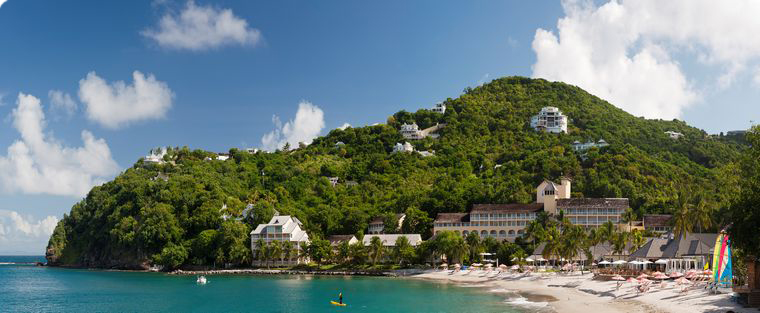
BEST CARIBBEAN RESORTS (Per FoxNews.com)

I'd love to personally experience a couple of these getaway resorts.  Let me know if you've visited any and how you liked them!

*   *    *    *    *    *    *    *    *    *

It's the time of the year when the cold weather has many of us running for the warm rays of the sun.  The Caribbean, a perennial favorite for Americans due to its close proximity and beautiful beaches, is an easy getaway.

Large hotel chains lure in tourists each week by the hundreds to their all-inclusive resorts with the promise of all-you-can-eat buffets and endless activities. There's no doubt that holiday-makers want no-hassle vacations for one set price with fancy restaurants, spas, gyms and great service. But not resorts are created equal. 

So if you've never been to the Caribbean and are contemplating an all-inclusive, or are just tired of cookie-cutter resorts with boring buffets, bad booze, and the same-old amenities, we're here to help.

While there are literally hundreds of properties to choose from, at all price points, we looked at the resorts for their unique amenities and services.  Whether you're looking for a romantic or family-friendly get-away, want to recharge your mind and body, or in it for the food or pampering, we break it down.   With features like upgraded restaurants, unique spa treatments, amazing accommodations and butler services to die for, it was no easy decision. 

Best for Romance: Galley Bay Resort & Spa, Antigua 


Antigua boasts a beach for every day of the week, but if you’re determined to visit as many as possible to find the best and most romantic, make it easy on yourself: Book a room here. If Giorgio Armani finds it home-worthy (he’s the next door neighbor), you certainly cannot question its coved, hidden-feeling design. 

“Galley Bay is situated on 40 acres of private paradise, surrounded by a bird sanctuary and a three-quarter-mile-long stretch of sand on the sunset side of Antigua,” said general manager Paolo Rovoletto. “This setting makes for a truly romantic hideaway, so in January 2011, we adopted an adults-only policy.”  

So, for all those thinking about taking the kids, this place isn't for you. Besides beach and quiet, Galley Bay reaches above and beyond with all sit-down restaurants, including Gauguin and its sequestered thatch cabanas for intimate dinners à deux.With spa treatments in a treehouse, suites a mere barefoot step from the beach, and off-beach cottages privatized with lush vegetation and their own pool, this is a true Caribbean original. 

Healthiest: BodyHoliday Le Sport, St Lucia


When guests book at this resort, a wellness specialist contacts them ahead of time to work out their needs and a schedule of 50-minute spa treatments, one for every day of their stay except arrival and departure. 

“This is customization way beyond just ‘what pillow would you prefer and what’s your choice beverage?’” said marketing director Andrew Barnard. “This is personalization of a vacation experience designed to fundamentally improve the lives of our guests in the long term by allowing them to design an inspiring and life-changing vacation experience.” 

With 30 spa treatment rooms, the BodyHoliday Wellness Centre is one of the most comprehensive in the Caribbean. It, along with the entire property, reopened in October 2011 after a $20 million injection of restorative health for itself. The resort’s Wellness Centre is at the core of the resort with its newly redoubled workout space and full line of skin and body care treatments, personalized programs such as detox and de-stress, Ayurvedic treatments, and holistic therapies including acupuncture, reflexology, and life coaching. 

Although there is an extra charge for some specialized programs, fitness classes are part of the package. Guests also stay fit working out on the tennis courts, shooting archery, water-skiing, and getting their feet wet with a one-day resort scuba course – all included.

Best for Dining: LaSource, Granada


The antithesis of the stuff-your-face buffet line and lounge-beachside-day long mentality, LaSource also goes the healthy route. 

It too includes a daily spa treatment in its rates, plus it offers healthy and gourmet cuisine. The chefs make use of Grenada’s wealth of vegetables, seasoning them with local spices to bring out the tastiest flavor profiles. All three of the resort’s main restaurants serve premium label drinks. The menus in the Great House mark their gourmet options as vegetarian (vegetable strudel, for instance), light (goat cheese parfait), gluten-free (rib-eye steak with wild mushroom sauce), and lactose-free (tandoori chicken breast). 

“Our health-conscious guests can indulge in flavorful, yet light cuisine while still maintaining their lifestyle,” said general manager Mark Grebby. 

The Garden Restaurant serves a buffet breakfast and à la carte lunch Italian or French style. Oscar’s Beach Bar and Restaurant offers another à la carte alternative at lunch and dinner (try the lobster salad) in an open-air setting, and for in-between, there’s the deli café with snacks and afternoon tea. 

For certified divers, scuba dives are also packaged in the all-inclusive rate; and starting this month, free masters’ classes include intense fitness, holistic, and sleep sessions taught by leading international instructors. 

Most pampering: Sandals Emerald Bay, Exuma, Bahamas


Sure, it has a chain name, but it excels beyond the Sandals brand as one of its Luxury Included properties. Having taken over a Four Seasons property a few years ago, this Sandals climbs several rungs above its predecessor with its butlers, trained to the standards of the Guild of Professional English Butlers, and complimentary scuba dives each day. 

“We’re in the business of pampering our guests,” said Jeremy Mutton, resort general manager. “Vacations are a time for guests to de-stress, reconnect with loved ones, and enjoy their well-deserved time off. When they arrive at Sandals Emerald Bay, we take the extra time to ensure that we’re exceeding their every expectation.” 

Isolated on a fantasy half-moon beach, it provides for all of its guests’ needs with seven restaurants, an 18-hole Greg Norman golf course, six Har-Tru tennis courts, a 150-slip marina, three pools, a full spa, windsurfing, snorkeling, and other watersports. (Spa treatments, golfing, and private pool cabanas cost extra.) The restaurants serve Italian, Bahamian, and other global cuisines, all included in the rates along with unlimited Beringer wine and premium brand drinks. 

Best for Families: Verandah Resort & Spa, Antigua


Many Caribbean all-inclusives cater to families, but not that many have their own 18-hole miniature golf course, expanded from 9 holes and opened last month. 

“The design replicates the bends and breaks found on real golf courses and features tunnels, bridges, and sharp corners,” said general manager Nigel Theophilus. “We’ve set the course amidst waterfalls, ponds, and lush landscaping. We’ve placed hidden speakers all around the green to provide upbeat music and entertainment.” 

Plus kids can play at shuffleboard and ping pong, on a way-cool playground, at the Kids Club, in their own pool with a mushroom fountain, or in two of three other pools. 

For those testy teens, the Pirates Den is open all day with a Wii station, foosball, fruit punch, and other attractive amenities. Or they can burn their energy kayaking, sailing, snorkeling, and such. A nature trail leads to the island’s famous Devil’s Bridge, the only remaining natural limestone bridge since the collapse of Aruba’s in 2005. 

Families can reserve adjacent suite accommodations with connecting balconies for a 50 percent discount, plus there are two-bedroom villas. 

The Verandah boasts two separate beaches – one for families, another for adults. Parents will also appreciate the spa and complimentary day and night supervised kids programs that the resort runs to allow adult alone-time together.


Read more: http://www.foxnews.com/travel/2012/01/20/best-caribbean-all-inclusive-resorts/#ixzz1k6kGBG00

Thursday, November 17, 2011

10 TIPS FOR TAKING YOUR DOG ON A BOAT


Good information for taking "man's best friend" on the boat!

Reprinted from October 31 Boats.com blog.

If you have a dog and you don't take him on your boat, poor little Fido is missing out.
Most dogs love getting out on the water as much as you and I do—and you wouldn’t leave you best friend stuck on shore every time you left the dock, would you? So the next time you grab your sailing bag or fishing rods, also grab the leash and the water bowl. Just remember to use these dogs-on-board tips, to keep the trip a fun one for everyone.
1. Bring plenty of fresh water. Dogs can’t perspire, and they’ll need to lap up lots of H2O in order to stay cool, especially when the sun is blazing.
2. Let him off the leash—if you trust him not to take a flying leap. Usually dogs won’t jump from a boat that’s moving (except in the case of a poorly trained hunting dog, or an inexperienced puppy), and he’ll be curious, and want to move around a lot. Note, however, that when the boat isn’t moving plenty of dogs will take an unexpected plunge.
3. Bring a piece of indoor-outdoor carpet. Lay it in the cockpit, and your dog will be able to keep a solid footing. Fiberglass nonskid decks may provide a secure footing to you and I, but they can be quite slippery to a dag’s paws.
4. Don’t cut bait, and leave it sitting out. Do so, and there’s a good chance it’ll get gobbled up. Yech—worm breath!
5. Don’t leave lures swinging from fishing rod tips. A dangling temptation with hooks is NOT what you want your pup to go chasing after.
6. Make sure the dog has a chance to relieve himself, before you leave the dock. Nothing ruins a trip on the boat like having to go… and being unable to!
7. Be prepared to turn around on rough days. Yes, dogs can get seasick, too. It’s not as common as it is with people, but it does happen. Don’t plan on a long day in rough waters until you’ve had a chance to expose your dog to rocking and rolling, and you know for a fact that he doesn’t get green when the waves kick up.
8. Take plenty of treats. Positive reinforcement is always the best way to get a pooch to do your bidding. With a handful of treats, you can get him to stay put when you’re occupied with important tasks, like setting the anchor or tying up lines.
9. Consider buying a dog vest. These provide floatation, and neoprene models also provide some warmth if you’re boating in cold waters and chilly air. This is especially important for retrievers, which almost always find a way to get wet sooner or later. In fact, jumping off the dock before you even shove off is a distinct hazard with this breed!
10. Use a ramp or carry your dog onto the boat, if it sits well below dock level. Otherwise there’s a fair chance your dog will try to jump onboard, and possibly injure himself. Boarding and disembarking should always be controlled, planned motions.
-Lenny Rudow

Thursday, November 10, 2011

50 YEARS OF BERTRAM: FIRST-HAND HIGHLIGHTS


"Thank God it's a Bertram!"
Bertram was known for its creative
advertising campaigns.


Marking Bertram Yacht’s 50th anniversary, company president Alton Herndon touts today’s Bertrams as “hard-core fishing machines,” which is what your grandad also might have said about the boats Richard Bertram built. He might have had a few other choice words for them as well: rugged, seakindly, maneuverable, rough-water boat, a sea keeper.

The Bertram legend lives on, although the boats have changed since grandpa’s day. The legend was born in April 1960 during the 172-mile Miami-Nassau race, when Bertram’s 31-foot Moppie knifed through 8-foot seas and a 30-knot wind to finish two-and-a-half-hours ahead of its nearest rival.

Moppie, named for Bertram’s wife, averaged a little more than 20 mph in those seas, riding a deep-vee hull conceived by C. Raymond Hunt, the design genius who revolutionized powerboating with this hull. Departing from the flat aft section that enables a boat to plane easier, but also causes it to pound, Hunt designed his hull with a constant 24-degree deadrise so the boat could cut and track through big seas. He added horizontal strakes to lift the boat on plane and deflect spray, and he gave it a rounded, bell-shaped V bow to soften the ride.

“Moppie could be driven hard into steep head seas, rolled very little in the trough and could track straight before following crests, a situation in which traditional underbodies would go dangerously out of control,” yachting journalist and racer Carlton Mitchell wrote of Bertram’s 31-footer. “Every successful ocean-racing powerboat since has been a modification of the same basic form.”

Mitchell described that legendary race from Miami to Nassau with Bertram and champion racer Sam Griffith this way in a May 24, 1965, Sports Illustrated article:
“We didn’t get caught out in bad weather; we went out in it deliberately. Small-craft warnings had come down at midnight before a 7-o’clock-in-the-morning start, and seas generated by a three-day nor’easter were running undiminished in the Gulf Stream. In that blow, Moppie became airborne at the end of the Miami breakwater to land somewhere short of Cat Cay with a crash that not only collapsed my chair but drove my spine into my skull, and I emerged from the eight-hour ordeal — in which we set a record — feeling like a survivor of the Battle of the Atlantic. But bruised and battered though I was, especially as the wind piped up harder than ever in the Tongue of the Ocean, I had learned that some modern power vessels don’t scare a crew to death in a bit of a blow. They can take it if you can, with comfort or lack of it in direct ratio to speed, and they get you to port safely.”
"BERTRAM WEATHER"
So was born not only the Bertram legend but also the descriptive term “Bertram weather” — weather only a Bertram will go out in. David Napier, of Dania, Fla., who retired in 1991 as Bertram’s chief designer after 22 years with the company, kept a Bertram 28 Flybridge at his dock for six months in the early ’70s for his personal use, as employees were encouraged to do then. “I’d take it out in the worst weather” — weather the Coast Guard warned him was too rough for small craft, Napier says. But he’d go out anyway and he’d come back in safely.
“After a while, they’d say, ‘OK, Bertram, we’ll keep an eye on you,’ and I’d go out and jump waves on that boat,” says Napier. “I’d go airborne and slosh down comfortable as could be. You couldn’t hurt that boat and it wouldn’t hurt you if you knew how to run it.”
That was the era when Bertram, known for its creative advertising, ran a series of ads generically known as “Just ask them in the boondocks.” These were tales of Bertram owners in Mexico’s Baja (“How to survive seven years in the Baja”) and Tahiti (“In Tahiti, even the best mechanics may have better things to do than fix your boat”) and the Dominican Republic (“When you want to know which boats hold together and which boats fall apart, ask the guys in the boondocks”).
You still hear stories about Bertrams’ legendary ability to hang tough in stormy seas. While visiting Homer, Alaska, in the early spring a half-dozen years ago, Napier saw three Bertrams — two 31s and a 28 — in the town marina among the commercial fishing boats. The air was still cold, about 30 degrees, and seas were running high. Napier says he saw a fisherman in boots and parka tossing fish off the Bertram 28 Flybridge onto the dock. He asked the obvious question.
“Been out fishing?”
“Yup.”
“Out there?” Napier asked, eyeing the seas.
The fisherman looked at him with puzzlement. “Why not? We’re running a Bertram here.”
Napier was stunned. The mystique of invincibility endures.

The 31' Moppie was the boat that started it all.

RACEBOAT IS MODEL FOR THE 31'

Dick Bertram was not first and foremost a powerboater or a boatbuilder on the day in 1958 when, as one of the America’s Cup crewmembers on the 12 Meter Vim, he saw a 23-foot tender with a Hunt-designed deep-vee hull slicing through a heavy chop on Block Island Sound. Bertram was a champion sailboat racer who had won trophies in college and crewed on winners in the Southern Ocean Raving Conference and the Newport-Bermuda Race, which he and Mitchell won three times running — 1956, 1958 and 1960 — on the yacht Finisterre. He also was a successful yacht broker and boatyard operator who had been helping to nurture the emerging sport of offshore powerboat racing.


After seeing the way the Hunt-designed tender ran through the slop, he commissioned Hunt to build him a 31-foot wooden deep-vee, Moppie. After winning the 1960 Miami-Nassau race, that hull became the plug for a fiberglass mold of the groundbreaking Bertram 31. Bertram built more than 1,800 Moppies until regular production ceased in 1983.

The early Bertrams were built for all sorts of recreational uses — racing, fishing, cruising — but as time went on sportfishing became the Bertram niche, says Lee Dana of Vero Beach, Fla., Bertram’s chief engineer from 1960 to 1989. The builder took a few stabs early on at building motoryachts with jazzed-up interiors to compete with Hatteras in the family cruising market, but Bertram’s target was the hard-core angler.

“That was our thing,” Dana says, so the company aimed for the bull’s-eye. It tricked out the boats for big-game fishing. Interiors were typically Spartan. One early 1980s ad that featured a letter from an angler’s wife named Diane Perry says it all. She writes that her husband bought a 28-foot Bertram Flybridge that she wasn’t all that crazy about.

“I was shocked at the high price we paid for what I considered to be a rather dull and sparsely appointed boat,” the letter reads. “My husband was quick to point out the quality of workmanship down to the tiniest detail and the high resale value. But for two seasons, I felt cheated bouncing around on our highly priced ‘fishing machine.’”Then she tells of encountering 10-foot seas while cruising offshore from Atlantic City, N.J., to Annapolis, Md., and getting tossed around “like ping-pong balls in a fan. … With waves hitting us broadside, the hull slapping down again and again with an ear-splitting sound, and the whirring of propellers in the air, I never felt so close to dying.” But they reached an inlet and made it safely to the marina. Concluding, Perry writes, “Our Bertram is worth every penny we paid for it. … Thank you for making the best boat on the water.”

That was what the men and women who toiled on the floor of the Bertram plant liked to hear. “We told ourselves we’re going to build the finest offshore powerboat in the world, and we really had that in our minds,” Napier says. And the builder had the staff to do it: skilled craftsmen, a crackerjack designer and one of the best engineering departments in the business under Dana.


BIGGER BOATS
As anglers ventured farther offshore, the boats became bigger. Dana remembers the Bertram 46 and 54 as its most popular and profitable sport fishermen. “They ran good, they looked good and they caught fish,” he says. The 46, introduced in 1970, was the first Bertram to abandon the Hunt deep-vee hull. Dana says the bigger, heavier boats needed a 15- to 17-degree deadrise in the aft section so they could come up on plane more quickly with less power.
The 54, which debuted in 1981, became an icon of the modern Bertram, a reliable, good-looking sea boat with a big cockpit for fishing and a more luxurious interior for the family and a growing number of anglers who appreciated a finely appointed lair. In the ’70s and ’80s, “We became more competitive in terms of interiors, goodies, galleys and staterooms,” Dana says.
A big contributor to that was Bertram in-house interior designer Marty Lowe. “I think ours were just as good as Hatteras’ toward the end [of that era],” says Dana. “When the boats weren’t doing serious fishing, they became motoryachts. We got the ladies aboard.”

Whittaker Corp., Bertram’s owner from 1967 to 1985, steered Bertram through its halcyon years. The recession of the late 1980s and early ’90s and a short-lived 10 percent luxury tax in the early ’90s nearly killed Bertram, as they did most other luxury yacht builders. Wrecked by these economic tsunamis, the company filed for Chapter 11 bankruptcy, then ran through a series of caretaker owners before Ferretti Group, a large and respected Italian boatbuilder, bought Bertram in 1998 with the intention of restoring the luster to the name and legend.

Today’s Bertram  is more luxurious and more finely styled than the Bertram of yesteryear. The lines are lower and sleeker but still clearly recognizable as those of a Bertram. And the yachts are getting bigger still. Bertram introduced an 80-footer at the 2010 Fort Lauderdale boat show. The $6 million flagship of the fleet is “185,000 pounds of muscle,” with twin 2,400-hp MTUs, a top speed of 35 to 37 knots, and a cruising speed of 30, says Herndon, Bertram’s president since February 2010. With a big, wide-open saloon, galley and dining area looking out through enormous windows and a spacious cockpit and flybridge, the 80-footer could be a very luxurious cruising yacht or a big, bruising sportfishing boat.
Herndon says to expect two more new models soon. “They’ll be longer, lower, sleeker, faster,” he says. “They’ll look like they’re moving while they’re sitting still, but you’ll still recognize them as Bertrams.”
Yet Herndon, a hard-core angler himself and president of rival Hatteras for 11 years in the ’80s and ’90s, is just as excited about the redesigned 54, Bertram’s new tournament battlewagon. Equipped with a pressurized live well, two freezers and six ice and storage compartments in the cockpit, plus storage below for 25 rods, the boat is fitted out for serious fishing. Typical of a Bertram, it offers good speed (40 knots) and a comfortable ride. It, too, is available in a version suitable for cruising or for more laid-back family fishing, but Herndon leaves no doubt where his heart is. And he says he has owner Ferretti’s backing in this.
“It’s sportfishing first,” he says. “We have to build hard-core fishing machines. That’s our heritage.”